
Network Records as Forensic Evidence
Network forensics occupies a distinct place in digital evidence: unlike endpoint artifacts, which capture what happened on a specific device, network records document the communications that transited the infrastructure itself. A subject who wipes a laptop cannot erase the firewall log showing a 4 GB transfer to an external IP address at 11 PM. A defendant who denies sending certain emails cannot alter the SMTP gateway's message tracking records. The network infrastructure sees everything that crosses it, and those records, when properly preserved and analyzed, provide an account of events that does not depend on what any single endpoint shows.
For New York law firms handling data breach litigation, trade secret matters, breach-of-fiduciary-duty claims, and employment disputes involving alleged data theft, network forensics frequently provides the most direct evidence of what actually occurred. NYCF's examinations cover the full range of network data sources present in modern enterprise environments in the New York metropolitan area, from on-premises infrastructure to hybrid cloud architectures and co-location facilities.
New York's concentration of financial services firms, law firms, media companies, healthcare institutions, and corporate headquarters creates a distinct forensic environment. Many network forensics matters in this jurisdiction involve securities regulation, HIPAA, New York SHIELD Act obligations, or the demands of commercial litigation in the Southern and Eastern Districts. NYCF's network forensics work is calibrated to the evidentiary standards and regulatory context that New York attorneys and their clients encounter. Matters that also require device-level examination can be addressed concurrently through our cyber forensics practice.
What NYCF Examines in Network Forensics Matters
A network forensics engagement begins with identifying and preserving every available data source before records are overwritten. Firewall logs on enterprise routers may rotate within days. Packet capture appliances often retain only the most recent 24 to 72 hours of data. NYCF prioritizes rapid evidence preservation when retained in the immediate aftermath of an incident, coordinating with counsel to issue litigation holds and preserve volatile records before the window closes.
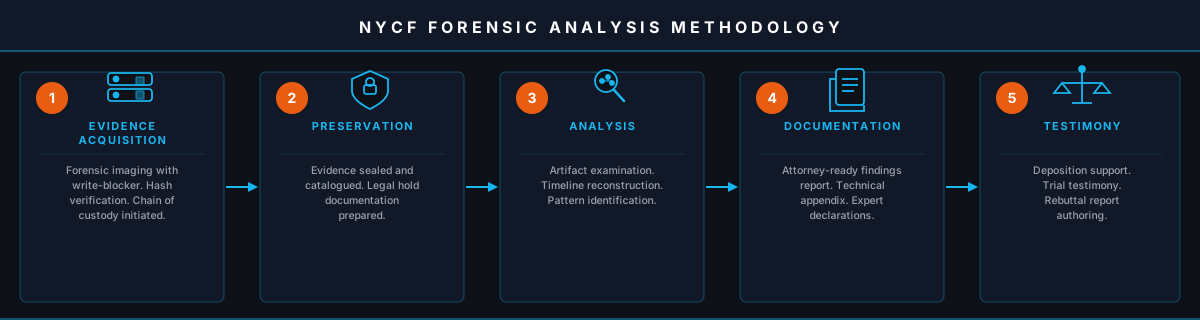
Once evidence is preserved with documented chain of custody, NYCF's analysts conduct the full examination:
Packet Capture and Protocol Analysis
Full-content PCAP files are examined at the protocol level using Wireshark and specialized forensic tools. Sessions are reconstructed, transferred files extracted, transmitted credentials recovered, and communications documented at the TCP/IP, application, and protocol layers. Protocols examined include DNS, HTTP/HTTPS, SMTP/IMAP, FTP, SSH, RDP, SMB, LDAP, Kerberos, and custom application protocols.
Firewall, Proxy, and Gateway Log Analysis
Connection logs, proxy access records, URL filtering data, and email gateway logs are examined to identify policy violations, reconstruct network activity timelines, and document data exfiltration paths. Log completeness is verified and gaps are documented as limitations on the conclusions that can be drawn.
IDS/IPS Alert Reconstruction
Intrusion detection and prevention system alerts are correlated across time and infrastructure to identify attacker activity sequences, attribute network behavior to specific internal or external parties, and reconstruct the progression of a breach from initial access through lateral movement and exfiltration.
NetFlow and DNS Record Examination
Where full packet captures are unavailable, NetFlow and IPFIX flow records document traffic volumes, connection patterns, and data transfer quantities. DNS query logs are examined for command-and-control communications, DNS tunneling, domain generation algorithm activity, and pre-breach reconnaissance patterns.
Timeline Reconstruction and Litigation-Ready Reporting
Findings from all network data sources are assembled into a chronological record of events with specific timestamps, source and destination addresses, byte volumes, and protocol-level detail. Reports are structured in two tiers: a full technical report suitable for expert disclosure and an attorney-facing narrative translating findings into plain language for client briefings and court submissions.
Network Forensics for New York Litigation
The legal matters that most commonly require network forensics analysis follow predictable patterns, and NYCF's examiners have built their practice around the specific demands of each:
Trade Secret and IP Theft Matters
Network forensic analysis documents which data left the network, to what destination, by which protocol, at what time, and from which internal source. This evidence establishes exfiltration scope and supports damages calculations under the Defend Trade Secrets Act and New York law.
Data Breach Scope and Timeline
Plaintiffs, defendants, insurers, and regulators all need to know which systems were accessed, what data transited the network, and how long the attacker was present. NYCF's network forensic findings answer these questions with documented evidence for HIPAA, SHIELD Act, GLBA, and PCI DSS breach notification and litigation contexts.
Insurance Coverage Disputes
The scope and timing of a breach as documented by network forensics directly affects cyber liability coverage determinations. NYCF provides technically grounded analysis for disputes over breach scope, policy period, and loss quantification in coverage litigation and arbitration.
SEC, FINRA, and Regulatory Proceedings
New York's financial sector generates a significant volume of regulatory proceedings where network forensics establishes the factual record. NYCF has supported matters before the SEC, FINRA, HHS OCR, and New York DFS, providing the technical documentation that regulatory examiners require.
Evidence Preservation and Chain of Custody
The forensic value of network evidence depends entirely on the integrity of its preservation. A packet capture file that cannot be authenticated, or a log export that lacks documentation of when and how it was collected, can be challenged or excluded. NYCF's evidence collection protocols are designed to produce records that withstand scrutiny in New York state courts, the Southern District, and federal regulatory proceedings.
For every piece of network evidence NYCF collects, the process includes: documentation of the collection date, time, and the identity of the examiner; cryptographic hashing (MD5 and SHA-256) of the collected data at the moment of collection; chain-of-custody documentation recording every transfer of the evidence from collection through examination; and a formal declaration suitable for attachment to expert reports or court submissions. These procedures follow NIST and Department of Justice evidence handling guidelines and are documented in a format that courts and opposing experts can verify.
NYCF examiners are available for deposition and trial testimony on network forensic findings. Our analysts have explained complex network protocol behavior to non-technical judges, juries, and arbitration panels in New York proceedings, translating packet-level technical analysis into the plain-language narrative that the trier of fact needs to evaluate the evidence. For matters that also require ESI collection and production, our eDiscovery team can be engaged concurrently.