Mobile Devices at the Center of New York Litigation
The smartphone in a litigant's pocket is now among the most consequential sources of evidence in New York civil and criminal proceedings. A single device can carry years of communications, continuous location history, financial transaction records, photographs with embedded geotags, and the complete history of interactions across dozens of applications. Manhattan employment attorneys rely on mobile data to document discrimination and retaliation claims. Commercial litigation teams at Midtown firms use phone records and messaging app data to trace trade secret misappropriation. Criminal defense counsel in state court and federal SDNY proceedings depend on mobile forensic analysis to test the government's timeline or place a client away from a crime scene.
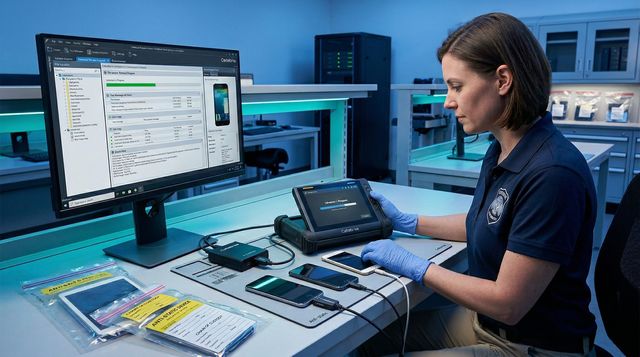
The evidentiary value of mobile data is matched by its fragility. Modern smartphones are designed with synchronization features, remote-wipe capabilities, and automatic update cycles that can alter or destroy evidence within hours of a triggering event. A device that is not placed into airplane mode or a Faraday cage immediately upon seizure may receive a remote wipe command, sync deletions from a cloud account, or receive an OS update that changes file system structures. NYCF's intake procedures address this risk from the moment a device is received. Devices are handled in RF-isolated environments during initial processing, preventing any wireless communication that could modify the evidentiary state of the phone before a forensic image is acquired.
NY CPLR Article 45 provides the framework for admissibility of business records and electronic evidence in New York courts. For mobile device evidence to satisfy authentication requirements under CPLR 4518 and related provisions, the acquiring party must be prepared to establish the reliability of the collection process, the integrity of the data, and the qualifications of the examiner. NYCF's examiners document every step of the acquisition process in a format designed specifically to support these foundational requirements, including hash verification at acquisition and at report generation to demonstrate that the examined data is identical to the originally captured image.
Extraction Tiers: Logical, File System, and Physical Acquisition
Not all mobile extractions produce the same data. The three primary acquisition tiers differ significantly in depth, complexity, and the types of evidence they can recover. Understanding these differences matters for counsel preparing to use mobile evidence at trial or in motion practice, because the extraction tier directly affects what deleted content may be available and what limitations apply to the resulting data set.
Logical extraction interfaces with the device's operating system through standard backup and synchronization APIs. This method produces the data the phone is designed to export: messages, contacts, call logs, calendar events, and application data that the OS exposes through its standard interfaces. Logical extraction is the fastest method and works reliably on most devices without requiring circumvention of security controls. For many matters, particularly those where the relevant communications occurred recently and the device has not been deliberately sanitized, logical extraction provides sufficient data to address the issues in dispute. NYCF performs logical extractions using both device-vendor tools and forensic platforms to ensure the most complete data set available at this tier.
File system extraction operates below the OS API layer, accessing the device's file system directly to recover data that logical backups omit. This tier captures application caches, thumbnail databases, crash logs, and files that are present on the storage medium but excluded from standard backups. File system extraction frequently recovers content from applications that do not participate in standard backup routines, including certain third-party messaging apps. On iOS devices, file system access typically requires the use of advanced forensic tools and may depend on the iOS version and whether certain vulnerabilities are available for that specific device configuration. File system extraction is NYCF's standard approach for matters where completeness of the data set is critical and the timeline permits the additional processing time required.
Physical extraction produces a bit-for-bit image of the device's storage medium, capturing active data, the file system, and unallocated space where deleted content may persist until overwritten. Deleted text messages, application data that the user has cleared, and files removed from the photo library may all reside in unallocated space and be recoverable through data carving techniques applied to a physical image. Physical extraction from modern iOS and Android devices requires circumventing full-disk encryption, which typically requires exploiting device-specific vulnerabilities or using advanced access tools. NYCF maintains current capabilities for physical extraction across the device models most commonly encountered in New York litigation, with access to Cellebrite's advanced decryption capabilities for supported devices. When physical extraction is not achievable for a specific device, NYCF performs the highest available extraction tier and documents the limitation with specificity sufficient for counsel to address at trial if necessary.
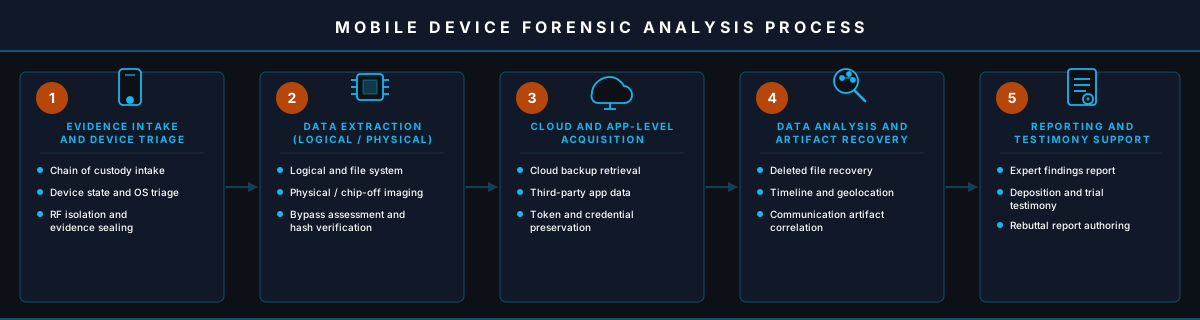
Device Intake and Isolation
Devices are received in RF-isolated conditions to prevent remote wipe commands or cloud synchronization from altering the evidentiary state. Serial numbers, IMEI, and physical condition are documented at intake.
Extraction Tier Selection
The appropriate extraction methodology is selected based on device model, OS version, encryption state, and the scope of evidence required. Logical, file system, or physical extraction proceeds using the best available tool for that device class.
Hash Verification and Image Integrity
A cryptographic hash (MD5 and SHA-256) is calculated at acquisition and recorded. This hash serves as the forensic baseline confirming the examined data matches the original acquisition.
Analysis and Data Recovery
The forensic image is analyzed for active data, deleted content, application artifacts, metadata, and geolocation information relevant to the matter. Custom keyword searches and timeline analysis are applied to counsel's specific questions.
Report and Expert Support
A detailed forensic report documents methodology, findings, and limitations in plain language suitable for use in New York courts. Expert witness testimony is available for deposition, evidentiary hearings, and trial.
Cloud Extraction and App-Specific Analysis
The data on a physical device represents only part of the mobile evidence picture. Modern smartphones are deeply integrated with cloud services that may hold backup copies of messages, call logs, photos, and documents that are not present on the device itself. Where the device has been wiped, lost, or is otherwise unavailable, cloud extraction through properly authorized legal process can recover substantial portions of the data that would otherwise be inaccessible. NYCF works with counsel to identify the cloud accounts associated with a device and to structure preservation requests and court orders that will support the most complete data recovery possible under the circumstances.
Apple iCloud backups contain device snapshots that may include deleted messages from periods covered by prior backups. iCloud Drive stores documents, photos, and app data independently of device backups. iCloud's "Messages in iCloud" feature, when enabled, keeps a synchronized copy of all iMessage and SMS traffic that is continuously updated. Google's ecosystem provides analogous capabilities through Google Drive, Google Photos, and Gmail. When these cloud repositories contain data from a relevant time period, they can substantially extend the evidentiary reach of a mobile forensic examination beyond what is recoverable from the physical device alone.
Application-specific analysis addresses the distinctive data structures that major messaging and social media platforms use to store content on the device. WhatsApp stores messages in an SQLite database that persists deleted message records in tables that are not immediately purged. Telegram's local databases include content that has been "deleted" from the chat interface. Signal, which is designed specifically to leave minimal data traces, still produces artifacts in system logs, notification databases, and metadata files that can provide contextual evidence about communication patterns even when message content itself is not recoverable. Facebook Messenger, Instagram, LinkedIn, and financial applications each have their own artifact patterns, and NYCF's examiners are trained in the current data structures of these platforms as they appear in New York litigation.
Location evidence from mobile devices is particularly significant in New York cases involving disputes about where a person was at a specific time. iOS Significant Locations, Android location history, and app-specific location databases from services like Google Maps, Uber, and Lyft all provide independent location records with timestamps that can corroborate or contradict witness accounts. NYCF's location analysis maps extracted coordinates against the specific geography of New York's boroughs, identifying whether a device was in Midtown Manhattan, at a specific address in the Bronx, or crossing the George Washington Bridge at a time that matters to the litigation timeline.
iCloud and Google Account Extraction
Cloud backup and account data recovery through properly documented legal process, preserving messages, photos, and app data that may not exist on the physical device.
Messaging App Forensics
Database-level analysis of WhatsApp, Signal, Telegram, iMessage, and other platforms, recovering active and deleted message content with timestamp and metadata integrity.
Location and Movement Analysis
Extraction and mapping of GPS coordinates, Wi-Fi connection records, cell tower associations, and app-specific location data to establish a device's movement history across New York City.
Deleted Data Recovery
Data carving from unallocated storage space on physical extractions to recover messages, photos, and documents removed from the active file system but not yet overwritten.
Mobile Forensics in New York Employment and Commercial Litigation
New York's concentration of financial institutions, media companies, law firms, and professional services organizations generates a disproportionate volume of employment and commercial litigation where mobile device evidence is dispositive. NYCF serves as the mobile forensic provider of choice for firms handling these matters throughout the Southern and Eastern Districts of New York and in New York Supreme Court, Commercial Division.
Trade secret and confidential information disputes frequently center on the question of what an employee transferred off a corporate device or onto a personal phone before departing a firm. Mobile forensic analysis can identify large file transfers via AirDrop or Bluetooth, screenshots taken of confidential documents, emails forwarded to personal accounts from a corporate email client, and the installation of file-sharing apps shortly before resignation. The timing of these activities relative to the employee's departure date is often as significant as the content itself, and mobile forensic timestamps provide a precise record that is difficult for opposing parties to dispute.
Employment discrimination and retaliation matters in New York frequently involve text messages and informal communications sent over personal phones. A supervisor's text messages may contain evidence of discriminatory comments that never appeared in corporate email. Personal phones used for work-related communications may contain records of conversations that are directly relevant to a hostile work environment claim. New York courts have been clear that personal devices used for work purposes are subject to preservation and discovery obligations under NY CPLR 3101, and NYCF's examiners provide forensic support for both the party seeking this evidence and the party required to produce it.
Family law proceedings in New York courts increasingly involve mobile device forensics. Concealed financial accounts accessed through mobile banking apps, communication with undisclosed partners, and location data that contradicts claimed whereabouts are among the most common issues addressed through mobile forensic analysis in matrimonial matters. NYCF works with matrimonial attorneys throughout the New York metropolitan area, providing forensic reports that comply with the particular evidentiary requirements of NY Family Court and Supreme Court matrimonial parts. All work product is coordinated through counsel to maintain appropriate privilege protections.
Criminal defense in New York state and federal courts has been transformed by mobile forensic evidence. The government routinely presents cell phone records, GPS data, and application activity as part of its case. Defense counsel who retain NYCF for independent forensic analysis may identify extraction methodology errors in government-produced reports, recover alibi evidence from location databases, or find that metadata associated with government evidence is inconsistent with the prosecution's factual narrative. NYCF's examiners are prepared to testify as defense experts in New York County, Kings County, Queens County, and federal SDNY/EDNY proceedings.
5G, Encrypted Messaging, and Emerging Mobile Evidence Challenges
The mobile device environment in New York is shifting faster than the legal frameworks that govern evidence from these devices. Manhattan's density of 5G infrastructure means New York litigants are among the first to encounter the new location-data patterns and network connection logs that 5G produces. Unlike 4G LTE, which associates devices with macrocell towers that may cover blocks or even miles, 5G millimeter-wave deployments in dense urban environments like Midtown Manhattan associate devices with small cells that cover only a few hundred feet. The resulting location resolution from 5G connection logs is significantly finer than what prior-generation records provided, with meaningful implications for cases where precise location matters.
End-to-end encrypted messaging applications present a persistent challenge for mobile forensic analysis. Signal, WhatsApp, and Telegram are designed to protect message content from interception in transit. What forensic analysis can address is the local artifact record on the device itself: the SQLite databases where these applications store messages, the notification caches that may retain message previews even when the messages themselves are deleted, and the system-level metadata that records when applications were opened and for how long. For parties in New York litigation who need to establish communication patterns rather than specific content, these artifacts can be highly probative even when the actual message text is encrypted or deleted.
Wearable devices and vehicle connectivity represent the expanding perimeter of mobile forensic evidence. An Apple Watch paired to an iPhone carries its own set of health metrics, activity logs, and notification history. A vehicle's connected infotainment system may retain the paired phone's contact list, call history, and location data from every trip. Fitness trackers record heart rate and movement data with timestamps that can corroborate or contradict accounts of physical activity at a given time. NYCF's mobile forensic practice includes examination of these peripheral devices as part of a comprehensive analysis of the evidence ecosystem surrounding a primary smartphone. Cross-reference of data from a phone, watch, and connected vehicle often produces a more complete and more reliable factual record than any single device alone.
Anti-forensic measures are increasingly common in high-stakes New York litigation. Burner phones, app-specific passcodes on messaging platforms, and systematic message deletion practices all represent attempts to limit the evidentiary record available through mobile forensics. NYCF documents the presence of anti-forensic activity as forensic evidence in its own right: the systematic deletion of messages from a specific date range, the installation and rapid removal of secure messaging applications, or the use of multiple SIM cards are each facts that may be relevant to spoliation motions under New York court rules and that counsel can use to request adverse inference charges. The absence of expected data is itself a finding that NYCF reports with specificity.
NYCF's Manhattan Presence for New York Litigation Teams
NYCF's primary office at 1500 Broadway, New York, NY 10036 is positioned to serve Manhattan law firms with the response times that New York litigation demands. When a temporary restraining order requires emergency preservation of a device, when a court-ordered forensic examination must begin within hours, or when trial preparation requires rapid turnaround on a new device produced in discovery, NYCF's Manhattan location means a qualified examiner can receive the device, begin processing, and be in communication with counsel the same day. Additional offices in White Plains and Rockville Centre extend this coverage to matters in Westchester County Court and Nassau County courts on Long Island.
NYCF's relationship with the New York legal community is built on the practical realities of how law firms actually work. Attorneys who retain NYCF receive direct examiner contact, not a case management intermediary. Reports are written with the specific court and legal standard in mind, not as generic technical documents that require translation for legal use. When scheduling requires an examiner to be present at a New York courtroom for a Daubert hearing or to provide deposition testimony at a law firm in Midtown, NYCF's Manhattan base makes that practical. For matters pending in the Commercial Division at 60 Centre Street or the federal courthouse at 500 Pearl Street, NYCF examiners are available for in-person preparation sessions with trial teams.
Confidentiality is fundamental to NYCF's engagement with law firms. Devices submitted for forensic examination are handled exclusively by NYCF personnel under attorney-client and work product privilege protections established at the time of engagement. No information about any matter is disclosed to third parties, and NYCF does not maintain searchable databases of case content across client matters. For matters involving particularly sensitive parties or high-profile litigation, NYCF can arrange secure off-site examination facilities or provide on-site examination services at the law firm's offices. Contact NYCF at (212) 561-5860 or info@digitalforensics-newyork.com to discuss the specific requirements of your matter.